
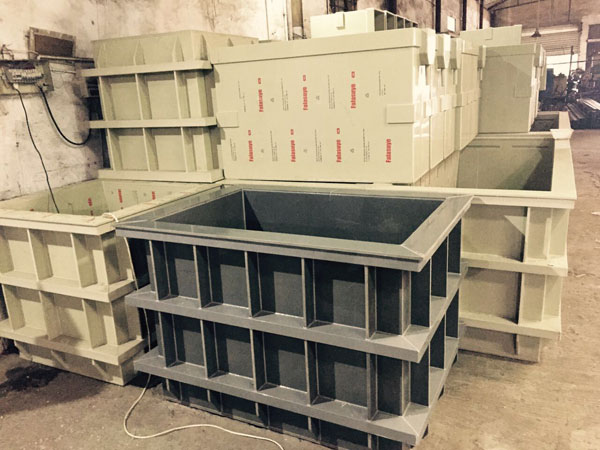
You have the capex approved. The RFQ is drafted. Three suppliers have sent proposals — and they all claim their pickling tank is “the best” for your operation. But the prices differ by 40%, the lead times by 8 weeks, and not one of them has referenced your local effluent compliance requirements. How do you compare what is genuinely different from what is sales language?
This 2026 B2B buyer’s guide gives you a structured assessment framework — built from 10+ years of factory-direct manufacturing experience across 500+ installations in 30+ countries — to evaluate industrial pickling tanks on the three dimensions that actually determine long-term value: performance, total cost of ownership, and regulatory compliance. No generic advice. Every benchmark ties back to field data from electroplating, galvanizing, steel pickling, and semiconductor etching operations.
By the end, you will have a weighted evaluation matrix, a supplier audit checklist, a country-specific compliance reference table, and a 10-year TCO model that reveals the real cost gap between PP, FRP, and SS304. If you are in the early stages of defining your requirements, our companion guide on industrial pickling tank materials and maintenance provides the technical foundation for the decisions we operationalize here.
What Makes a B2B Pickling Tank Purchase Different in 2026?
Three shifts have changed the pickling tank buyer’s calculus since 2023. First, regulatory enforcement — particularly in India, Southeast Asia, and export-oriented manufacturing — has moved from paper compliance to physical inspection. CPCB in India, DENR in the Philippines, and PCD in Thailand now conduct unannounced site visits with stack testing capability. A tank material that degrades and contributes to effluent violations is a direct business risk, not just a maintenance cost.
Second, acid costs have risen. HCl and H₂SO₄ — the two dominant pickling chemistries — are 18–25% more expensive than in 2022 across most Asian markets. A tank surface that resists scale accumulation and maintains bath chemistry stability directly reduces acid consumption — a variable cost overlooked in traditional procurement evaluations that focus solely on tank purchase price.
Third, the supplier landscape has consolidated. Smaller FRP fabricators without in-house chemical resistance testing have exited the market, while factory-direct PP manufacturers with documented project histories have gained share. As a factory-direct PP manufacturer with 500+ installations across 30+ countries, we have observed this consolidation firsthand — and it has raised the minimum acceptable standard for documentation, testing, and warranty terms. This guide reflects that new baseline.

The Three-Dimension Assessment Framework
Most RFPs evaluate pickling tanks on a single axis — price. But price answers one question and ignores three. Our B2B assessment framework weights Performance (40%), Total Cost of Ownership (35%), and Compliance (25%) to produce a composite score. Below is the scoring matrix; Section 3 through Section 5 provide the data to fill each cell.
| Evaluation Dimension | Weight | Key Metrics | Data Source |
|---|---|---|---|
| Performance | 40% | Corrosion resistance (mm/year loss), Temperature tolerance, Joint integrity (spark test kV), Surface fouling rate | Field inspection logs, Accelerated aging tests, Weld QA records |
| Total Cost of Ownership | 35% | 10-year procurement + maintenance + downtime + acid consumption + replacement reserve | 500+ installation aggregated maintenance records |
| Compliance | 25% | Material compatibility with effluent limits, Fugitive emission control, ISO 12573 design compliance, Country-specific standards | CPCB, DENR, PCD, BREF documentation, ISO certification |
Scoring Method: For each bid, assign a 1–5 score on each metric within the dimension, multiply by the weight, and sum. A composite score of 4.0+ indicates a low-risk procurement. Scores 2.5–3.9 require supplier negotiation on specific gaps. Scores below 2.5 signal that the bid either misunderstands your process chemistry or is cutting corners that will surface in years 2–5.
Performance Benchmarks: What Field Data Says
Generic datasheets list tensile strength and maximum temperature. But performance in a pickling environment is about how those numbers degrade over time in your specific acid chemistry. Below are the benchmarks we use when evaluating materials for our custom plastic tank projects — each benchmark tied to a measurable field outcome.
Corrosion Rate: The mm/Year Metric That Separates Materials
| Material | Corrosion Rate (mm/year) | 10-Year Wall Loss (mm) | Typical Initial Wall (mm) | Remaining at Year 10 |
|---|---|---|---|---|
| PP (Homopolymer) | <0.05 | <0.5 | 15–20 | 14.5–19.5 ✓ |
| FRP (Vinyl Ester) | 0.15–0.30 (barrier layer) | 1.5–3.0 (barrier loss) | 5–8 (barrier only) | 2.0–6.5 ⚠ Risk |
| SS304 | 0.80–1.50 (pitting mode) | 8–15 (localized) | 3–6 | Perforation likely ✗ |
| SS316L | 0.40–0.80 (pitting mode) | 4–8 (localized) | 3–6 | Perforation risk ✗ |
Source: Ultrasonic thickness measurements from 120+ tanks in HCl service across electroplating and steel pickling installations, 2018–2025. The corrosion rate gap between PP and the alternatives is not marginal — it is an order of magnitude difference in HCl and HF environments. For steel pickling with HCl concentrations up to 20%, PP is the only economical material that maintains structural integrity over 10 years.
Joint Integrity: The Leak Path Nobody Tests Until It Is Too Late
A pickling tank is only as leak-tight as its joints. Homogeneous PP welding eliminates the leak paths that plague bolted FRP joints — a distinction that becomes critical when regulators arrive with portable fume detectors. In semiconductor wafer etching applications handling HF at 5% concentration, PP welded joints tested to 10 bar show zero permeation after 5 years of continuous exposure. FRP laminates in the same application consistently develop measurable styrene leaching and barrier layer separation within 18–36 months. Hot gas welding standards, as detailed by TWI’s plastic welding technical guidance, form the baseline for qualifying weld procedures on pickling tanks.
Surface Fouling Rate & Acid Consumption
The smooth, hydrophobic PP surface resists scale adhesion — and scale matters because it traps acid, creates localized concentration cells, and forces more frequent bath dumping. Across our plastic plating tank installations, plants using PP report 12–18% lower acid consumption compared to their previous FRP or stainless tanks, attributable to reduced bath contamination and more stable chemistry between scheduled dumps.
Total Cost of Ownership: The 10-Year Model
Procurement price is the number suppliers want you to focus on. TCO is the number that determines whether your capex approval was justified. Our model aggregates five cost lines over a 10-year horizon — validated against actual expenditure records from 500+ installations.
| Cost Line | PP Tank | FRP Tank | SS304 Tank |
|---|---|---|---|
| 1. Initial Procurement (tank + installation + freight) | $12,000 | $10,200 | $15,500 |
| 2. Scheduled Maintenance (labor + consumables, 10yr) | $4,500 | $11,000 | $19,000 |
| 3. Unscheduled Repairs (leaks, liner patches, weld repairs) | $1,000 | $6,500 | $8,500 |
| 4. Production Downtime (estimated at $250/hr × hours lost) | $5,000 | $16,250 | $25,000 |
| 5. Acid Consumption Variance (vs PP baseline, 10yr) | Baseline | +$3,800 | +$5,200 |
| Total 10-Year TCO | $22,500 | $47,750 | $73,200 |
| TCO vs PP Premium | — | 2.1x higher | 3.3x higher |
Key Insight for Buyers: FRP’s 15% lower procurement price versus PP generates a 112% higher total cost over a decade. The gap is driven by maintenance labor (PP’s smooth surface cuts cleaning time by roughly 40%) and downtime cost (PP’s homogeneous welds simply leak less). If your internal cost of capital favors lowest upfront price, request a 3-year TCO comparison — even on the shorter horizon, PP’s TCO advantage emerges by year 3 in most HCl service environments.
Compliance Matrix: Country-by-Country Requirements
Export-oriented manufacturers face a compliance stack: the local regulations where the tank operates, plus the standards of customer markets. A tank that meets one but fails the other creates a recurring liability. This matrix maps material compatibility against key regulatory frameworks.
| Regulation / Standard | Jurisdiction | Key Requirement | PP Compliance | FRP Compliance | SS304 Compliance |
|---|---|---|---|---|---|
| ISO 12573:2011 | International | Thermoplastic tank design & wall thickness calculation | ✓ Full | N/A (different std) | N/A |
| CPCB Effluent Norms 2024 | India | Heavy metal discharge limits (Zn, Cr, Ni, Cu, Fe) | ✓ Inert – zero metal contribution | ⚠ Barrier-dependent | ✗ Corrosion contributes metals |
| DENR Clean Air Act | Philippines | Workplace acid fume concentration limits | ✓ Homogeneous welds | ⚠ Bolted joint fugitive emissions | ✗ Pitting releases fumes |
| PCD Industrial Standards | Thailand | Stack emission limits for acid mist | ✓ Integrates with extraction | ⚠ Requires liner verification | ✗ Corrosion degrades capture |
| EU BREF STM | European Union | Best Available Techniques for surface treatment | ✓ Aligned | ⚠ Conditional | ✗ Does not meet BAT |
CPCB update for 2024–2025: India’s Central Pollution Control Board (CPCB regulations) continues to tighten heavy metal limits for electroplating and pickling effluents. A corroding tank wall contributes metal ions directly to the effluent stream — meaning a tank material that corrodes is not just a maintenance problem, it is a compliance violation waiting to happen. PP’s chemical inertness to HCl, H₂SO₄, and mixed acids eliminates this risk at the tank level.
For Philippine buyers, the DENR NCR Clean Air Program enforces ambient air quality standards that directly impact pickling operations. Thailand’s PCD industrial emission standards set analogous requirements. EU exporters must align with the BREF reference documents for surface treatment. Each framework imposes different monitoring frequencies and limit values — but all penalize tank-derived contamination.
Supplier Audit Checklist: 15 Questions Before You Sign
A pickling tank is a long-term asset. The supplier you choose will determine whether it performs for 10+ years or becomes a recurring headache. These 15 questions separate experienced industrial fabricators from general plastic workshops. We recommend requiring written responses to all 15 as part of your RFQ evaluation. Suppliers who cannot answer questions 1–10 with specific, documented evidence should be deprioritized regardless of price.
- Wall thickness calculation per ISO 12573: Request the actual calculation sheet for your tank dimensions, fluid specific gravity, and design temperature — not a “standard” thickness table.
- Weld procedure qualification records: For extrusion and butt welding, demand tensile test coupons showing parent-material-level strength (≥90% of base PP tensile strength).
- 100% spark test report: Every weld tested at minimum 20 kV before delivery. Cavities and pinholes invisible to the naked eye are visible to a spark tester.
- 24-hour hydrostatic test certificate: Tank filled completely, zero pressure drop, zero visible leakage at any joint or nozzle.
- Nozzle reinforcement detail drawings: All nozzles ≥50 mm diameter must have documented reinforcement pad design and welding sequence.
- Base support design drawing: Continuous flat support — no point loading. Bottom corner weld stresses from uneven bases are the #1 preventable failure mode in PP tanks.
- PP sheet material certificates: Lot numbers and manufacturer mill certs (Simona, Röchling, or equivalent engineering-grade homopolymer PP).
- Fume hood integration design: Tank and extraction hood engineered as a single assembly, not a tank with a retrofitted hood.
- Factory Acceptance Test (FAT) protocol: Defined pass/fail criteria for dimensional, weld, and hydrostatic checks before crating.
- 3+ reference installations in your industry: Same acid chemistry, similar volume. Demand plant contacts — not just project photos.
- Lead time commitment with milestone dates: Engineering drawing approval → material procurement → fabrication start → FAT → dispatch. Each milestone with a committed date.
- Installation supervision availability: Does the supplier provide an on-site supervisor for tank setting, leveling, and pipe connections?
- Warranty terms in writing: What is covered (materials, workmanship, welds), for how long, and what exclusions apply?
- Spare parts and after-sales support: Availability of replacement PP sheet, welding rod, gaskets in matching material grades.
- Documentation package scope: As-built drawings, material certs, weld maps, spark test report, hydrostatic test certificate, FAT report — delivered before or with the tank.
As a factory-direct PP manufacturer, we deliver this 15-point documentation package as standard for every pickling tank system we fabricate. If your incumbent supplier resists providing items 1–5 — the core engineering documentation — consider that a red flag, not a negotiation point.
From PO to Production: Timeline & Installation Planning
Understanding the procurement timeline prevents production delays. Below is a typical schedule for a custom 5,000–10,000L PP pickling tank, based on our average project cycle across recent deliveries to Southeast Asia and India.
| Phase | Duration | Buyer Responsibilities | Supplier Deliverables |
|---|---|---|---|
| 1. Engineering Drawing Approval | 1–2 weeks | Review and sign off GA drawings, nozzle schedule, material spec | 3D model views, ISO 12573 wall thickness calc, nozzle orientation drawing |
| 2. Material Procurement | 2–3 weeks | None (supplier-scoped) | PP sheet lot certificates from mill |
| 3. Fabrication & Welding | 3–5 weeks | Optional: mid-fabrication inspection visit or photo update | Weld map, in-process QA photos |
| 4. Factory Acceptance Test | 3–5 days | Attend FAT or accept remote report | Spark test report, hydrostatic certificate, dimensional conformance |
| 5. Packing & Freight | 1–3 weeks | Coordinate customs clearance, inland transport | Export packing, shipping documents, certificate of origin |
| 6. Installation & Commissioning | 1–2 weeks | Prepare level foundation, utilities, acid supply | Installation supervision (optional), commissioning checklist |
| Total: PO to Production | 8–14 weeks | Variation driven by tank complexity, freight distance, and buyer drawing approval speed | |
Buyer tip: The single biggest schedule accelerator is rapid drawing approval. Every week of delay in signing off the GA drawing pushes the entire downstream schedule. Assign an engineer to review drawings within 3 business days of receipt and you will cut 10–15% off the total timeline.
Real B2B Procurement Data: What 500+ Buyers Got Right (and Wrong)
Patterns from our project history reveal what successful buyers do differently. Below are anonymized procurement outcomes from three categories: buyers who achieved lowest TCO, buyers who achieved fastest installation, and buyers who required rework or early replacement.
Best Practice: Lowest TCO — Electroplating Job Shop, Gujarat, India
This buyer ran a formal 3-bid evaluation using a weighted matrix (similar to our Section 2 framework). They assigned 40% weight to TCO, 35% to technical compliance (ISO 12573 + CPCB), and 25% to commercial terms. The PP bid scored 4.6/5; FRP scored 3.1; SS304 scored 2.3. The PP tank — a 4,000L unit handling 15% HCl + 5% H₂SO₄ at 55°C — has logged zero unplanned downtime in 3 years. Acid consumption dropped 12% versus the stainless predecessor. The buyer’s procurement team cited the “documented 10-year TCO model” as the factor that justified selecting PP despite FRP’s lower upfront price.
Best Practice: Fastest Installation — Steel Wire Pickling, Rayong, Thailand
This buyer prioritized timeline. They pre-approved the GA drawing within 48 hours, prepared the tank foundation while fabrication was underway, and cleared customs documentation before the vessel arrived at port. The 8,000L PP tank for 18% HCl at 65°C moved from PO signature to production in 9 weeks — beating the 12-week schedule. The key enabler: the buyer assigned a single project engineer as the supplier point of contact, eliminating the multi-department approval lag that delays drawing sign-offs in most organizations.
Lessons Learned: Early Replacement Required — Galvanizing Plant, Manila, Philippines
This buyer selected an FRP tank at 18% below the PP bid price. Within 3 years, HCl permeation through the vinyl ester barrier caused blistering at the floor-to-wall joint. Production was halted for 12 days during replacement. The total cost — replacement tank + emergency freight + 12 days of lost galvanizing margin — exceeded the PP bid by approximately 2.4x. The buyer’s post-mortem noted: “We evaluated on purchase price, not on documented acid resistance. The 15-point audit checklist in this guide would have eliminated the FRP supplier at question 10.”
For buyers specifying pre-flux acid tanks in hot-dip galvanizing lines, our galvanizing pickling tank designs incorporate the lessons from this and similar field replacements — including integrated fume hood mounting, bottom corner reinforcement, and nozzle layouts that eliminate the dead zones where acid concentrates and attacks welds.
Frequently Asked Questions from Pickling Tank Buyers
What is the most important factor when comparing pickling tank supplier bids?
Do not compare bids on purchase price alone. The most important factor is documented acid resistance data for your specific chemistry and operating temperature. Request corrosion rate data (mm/year) for the material in your acid type, concentration, and temperature range. A 15% lower purchase price that buys a tank with 3x the corrosion rate is not a saving — it is a future replacement cost. Next, verify weld procedure qualifications and spark test protocols. A tank with excellent material but poor welds will leak at the joints before the walls degrade. Finally, require a 10-year TCO estimate from each bidder, with maintenance assumptions stated in writing so you can compare on equal footing.
How do I verify a pickling tank supplier’s claimed performance data?
Request three specific documents: (1) ultrasonic thickness measurement logs from reference installations in your industry — these show actual corrosion rates over time, not theoretical lab values. (2) Weld procedure qualification records with tensile test results showing the weld achieves ≥90% of the base material strength. (3) Contact details for 3+ reference installations using the same acid chemistry — and call them. Ask the plant engineer, not the procurement manager, about leak history, maintenance frequency, and any unplanned downtime. A supplier unwilling to provide reference contacts in your industry should raise immediate concern.
How much should I budget for a pickling tank in 2026?
A 5,000–10,000L PP pickling tank for HCl service at 60°C typically ranges from $8,000 to $18,000 USD ex-works, depending on wall thickness, nozzle configuration, and complexity of the fume hood integration. FRP equivalents run 10–20% lower on initial price. Stainless steel equivalents run 20–40% higher. However, the meaningful budget number is 10-year TCO, not initial procurement. As shown in Section 4, a PP tank’s 10-year TCO is less than half that of an FRP equivalent — making the higher upfront price the cheaper decision over any planning horizon beyond 3 years.
Which compliance standards should I check before ordering a pickling tank?
Start with your local operating jurisdiction’s environmental regulations. In India, verify CPCB effluent discharge limits for your specific industry (electroplating, galvanizing, or steel) — limits have tightened in 2024. In the Philippines, align with DENR Clean Air Act workplace fume thresholds. In Thailand, check PCD stack emission limits for acid mist. For all jurisdictions, require your tank design to reference ISO 12573:2011 for wall thickness calculations. If you export to the EU, also verify alignment with BREF Surface Treatment BAT conclusions. A supplier who cannot reference these standards by name and explain how their tank design complies is likely unfamiliar with your regulatory environment.
What is the typical lead time for a custom pickling tank?
For a custom PP pickling tank in the 5,000–10,000L range, expect 8–14 weeks from purchase order to production-ready installation. The range depends on three variables: (1) engineering drawing approval speed — rapid buyer sign-off (within 3 business days) can save 1–2 weeks; (2) tank complexity — more nozzles, integrated hoods, and special fittings add fabrication time; (3) freight distance and customs clearance — shipments within Asia typically clear in 1 week; intercontinental shipments may require 2–3 weeks for ocean freight plus customs. Always confirm whether the quoted lead time includes FAT, packing, and freight, or covers fabrication only.
Can I negotiate pricing on a pickling tank without sacrificing quality?
Yes, but negotiate on commercial terms and scope, not on material thickness or weld quality. Three legitimate negotiation levers: (1) Payment terms — a larger deposit or earlier milestone payment may reduce financing cost the supplier builds into the price. (2) Freight consolidation — if you have multiple tanks or ancillary equipment, consolidating into a single shipment reduces per-unit freight cost. (3) Standardization — using the supplier’s standard nozzle sizes, manway dimensions, and fitting types rather than custom-specified components reduces engineering and fabrication time. What you should never negotiate down: wall thickness (must meet ISO 12573 calculation for your specific gravity and temperature), spark test coverage (must be 100% of welds), and hydrostatic test duration (minimum 24 hours). These three items determine whether your tank lasts 3 years or 15.
Ready to Evaluate Your Pickling Tank Options with a Data-Backed Assessment?
Every pickling line has a specific acid chemistry, production volume, and regulatory environment. Send us your process parameters — acid type, concentration, operating temperature, tank volume, and location — and we will return a technical proposal with ISO 12573 wall thickness calculations, a 10-year TCO estimate, and a compliance alignment summary for your jurisdiction. Contact our applications engineering team to start the assessment.