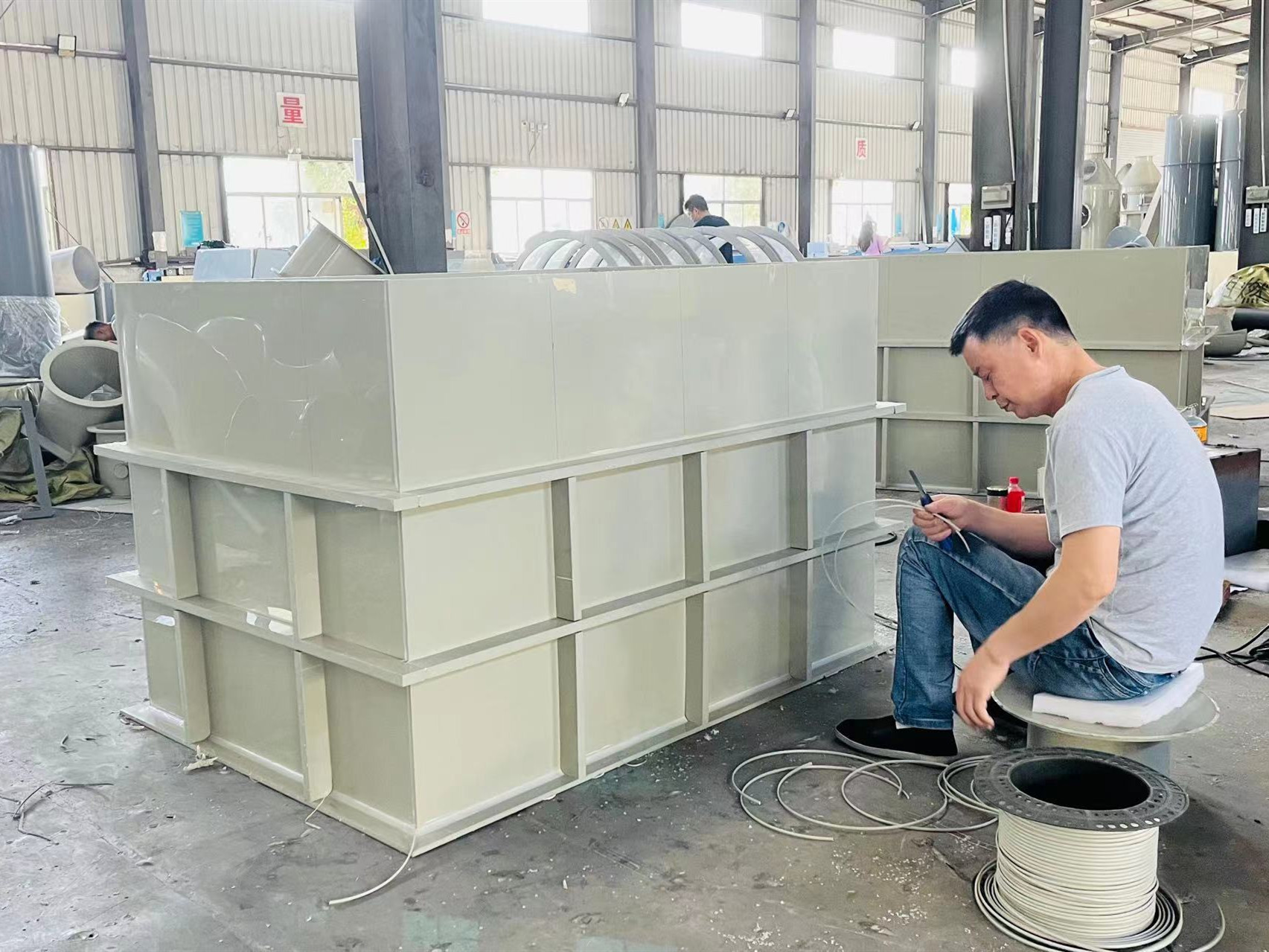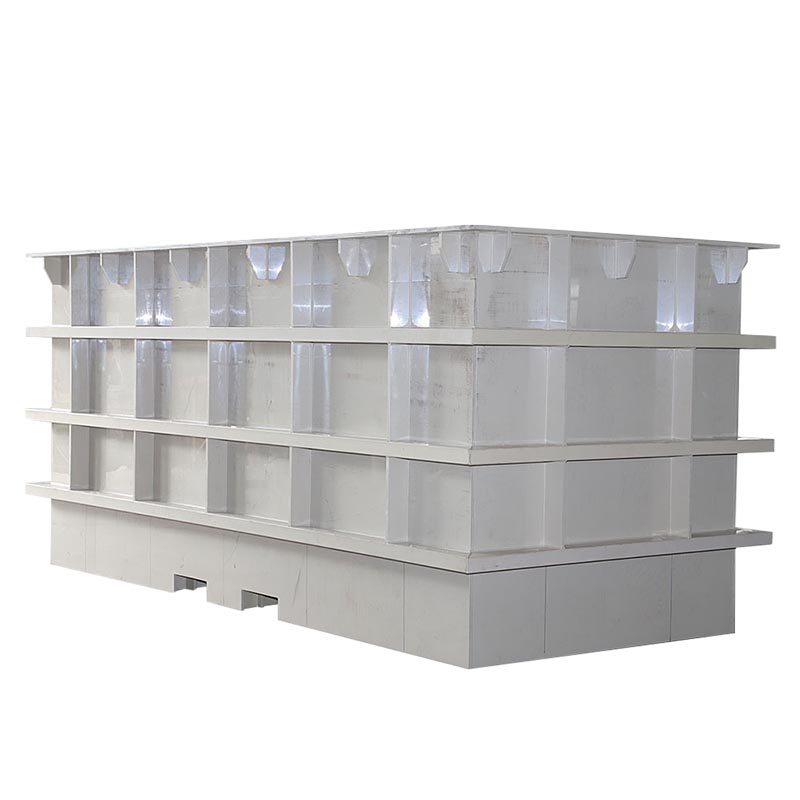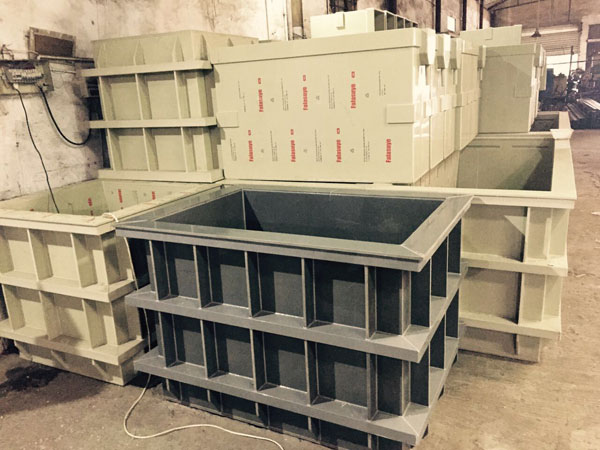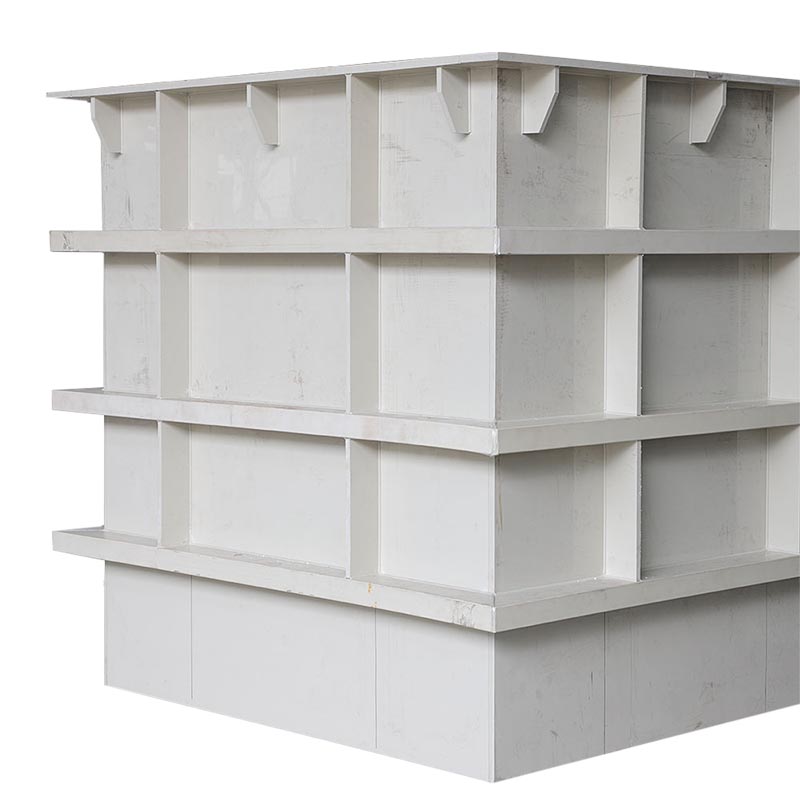
Walk into any electroplating shop, steel mill, or galvanizing plant, and one piece of equipment dominates the production floor: the pickling tank. It is a large, acid-filled vessel where metal parts soak to shed rust, scale, and oxides before the next process step. The air around it is sharp and acrid — a sign that hydrochloric or sulfuric acid is at work. The tank itself may be rectangular, cylindrical, or custom-shaped. It may hum with circulation pumps or sit quietly as a static dip station. But its job is always the same: chemically clean metal surfaces so coatings, plating, or galvanizing can adhere properly.
If you are reading this, you likely need to specify, buy, or maintain a pickling tank — and you want a clear starting point that does not assume you already know the industry shorthand. This guide is that starting point. It explains what a pickling tank does, what it is made of, how it is built, and what industrial buyers should know before their first RFQ. No chemistry textbook depth — just enough factory-floor knowledge to make informed decisions. If you are ready to move from “what is it” to “how do I buy the right one,” our pickling tank buyer’s guide for 2026 picks up where this overview leaves off.
What Does a Pickling Tank Actually Do?
A pickling tank holds an acid solution — most commonly hydrochloric acid (HCl) at 10–20% concentration or sulfuric acid (H₂SO₄) at 5–15% — heated to anywhere from 25°C to 80°C. Metal components are immersed in this bath for a set duration. The acid reacts with oxides on the metal surface — rust, mill scale, weld discoloration — and dissolves them. What emerges is chemically clean, bare metal, ready for the next operation: electroplating, hot-dip galvanizing, phosphating, or painting.
The critical insight most introductory explanations miss: the tank is never just a tank. A complete pickling station includes acid-resistant tank walls, heating elements or external heat exchangers to maintain bath temperature, circulation pumps to prevent acid stratification, fume extraction hoods that pull acid mist away from the operator’s breathing zone, overflow weirs and drain connections for solution management, and temperature controls with high-limit safety cutoffs.
In a typical electroplating line, you will see a row of rectangular tanks — clean, rinse, acid pickle, rinse again — each with its own chemical identity. In a steel wire pickling operation, the tanks may be long and narrow, with the wire passing through continuously. In galvanizing, the pickle tank sits immediately before the flux tank and the zinc kettle. The chemistry changes slightly from shop to shop — some add inhibitors to protect the base metal, others use mixed HCl/H₂SO₄ blends — but the core function stays consistent: remove oxides, produce a chemically active surface.

Where Are Pickling Tanks Used? Real Factory Scenes
To understand what a pickling tank is, it helps to see where it lives. Here are three real environments — drawn from our project documentation across 500+ installations — where pickling tanks do their work daily.
Electroplating Shop Floor
The pickling tank sits in a row of process tanks — degreasing, pickling, rinsing, plating — each approximately 1,000–5,000 liters. Overhead cranes move racks of parts from tank to tank. The acid bath is typically HCl-based, heated to 50–60°C. Fume extraction ducts run above the tank, pulling acid mist into a scrubber before release. Operators in chemical-resistant aprons and face shields monitor temperature gauges and acid concentration with simple titration kits. The tank’s polypropylene walls have turned slightly matte after years of service but show no leaks — the homogeneous welded seams hold as they did on day one.
Steel Wire Pickling Line
Here the tank is longer — sometimes 12–15 meters — and narrow, designed for continuous wire throughput. The acid is HCl at 15–20%, at 65°C. The tank sees higher mechanical stress from the wire guides and tensioners, and the acid bath accumulates dissolved iron chloride faster than a batch shop. From the walkway, you can see the reddish-brown tint of the acid bath darkening with use — iron content is approaching the dump threshold. A well-designed PP pickling tank in this application maintains structural integrity with wall thicknesses calculated per ISO 12573 for the specific specific gravity of the iron-laden acid.
Hot-Dip Galvanizing Plant
Before steel fabrications enter the molten zinc kettle at 450°C, they pass through a pickling tank holding 10–14% HCl at ambient to 40°C. The tank is large — 6,000–15,000 liters — because the steel sections (lattice towers, guardrails, structural beams) are bulky. The acid attacks mill scale aggressively, and the bath life is measured in throughput tonnage, not calendar days. A fume hood integrated directly into the tank design captures acid mist before it reaches the factory rafters. This is the environment where PP’s chemical inertness proves decisive — any tank material that corrodes would contaminate the pickle bath and degrade galvanizing quality.
What Materials Are Used to Build Pickling Tanks?
Three material families dominate pickling tank construction, and they perform very differently in acid service. Here is the concise comparison — if you need the full data-backed analysis, our industrial pickling tanks materials guide provides detailed corrosion rates, TCO tables, and failure mechanism explanations.
| Material | Best For | Avoid When | Typical Service Life (HCl) | Key Weakness |
|---|---|---|---|---|
| Polypropylene (PP) | HCl, H₂SO₄, HF up to 80°C | Concentrated HNO₃, continuous >90°C | 10–15 years | Oxidizing acids cause stress cracking |
| FRP (Fiberglass) | Mixed acids, temperatures >95°C with correct resin | HF service (permeation risk), applications needing zero emissions | 5–8 years | Acid permeation through barrier layer causes blistering and delamination |
| Stainless Steel (SS304/316L) | Alkaline cleaners, intermittent acid exposure | Continuous HCl or HF immersion | 1–3 years (SS304), 2–4 years (SS316L) | Pitting corrosion in chloride environments; rapid wall penetration once initiated |
For new buyers, the most common mistake is choosing by price rather than by acid compatibility. A PP tank typically costs more upfront than FRP — and the FRP supplier will highlight this. What the FRP quote does not show is the 3x higher maintenance cost and 2x higher downtime cost over a decade. The smooth, hydrophobic PP surface resists scale adhesion and simplifies cleaning — accounting for the 40% lower maintenance labor observed across our project database.
If your process involves HCl — whether at 10% or 20% — PP is the reference material. For detailed guidance on what to demand from any material supplier, the procurement checklist in our B2B buyer’s guide lays out the 15 questions every RFQ should include.
How Is a Pickling Tank Actually Made?
Most introductory articles describe what a pickling tank does but not how it comes into existence. Understanding the fabrication process helps a buyer evaluate supplier quality — and explains why two tanks of the same dimensions can differ in price by 30%.
Step 1: Wall Thickness Calculation (ISO 12573)
Before any PP sheet is cut, an engineer calculates the required wall thickness for the tank’s dimensions, fluid specific gravity, and design temperature. This is not a standard-thickness table lookup — it is a calculation per ISO 12573:2011, the international standard for thermoplastic tank design. The bottom of the tank typically requires 20-30% greater thickness than the sidewalls because hydrostatic pressure is highest there.
Step 2: Sheet Cutting and Edge Preparation
Engineering-grade homopolymer PP sheets — sourced from mills with full material traceability — are cut to dimension on CNC routers. Edges are machined to the correct bevel angle for the weld joint type (typically 60° V-groove for butt welds on tank walls). The cut sheets are cleaned to remove any surface contamination that would compromise weld integrity.
Step 3: Extrusion and Butt Welding
PP sheets are joined using hot-gas extrusion welding — a process that melts the parent material and a filler rod of identical PP grade into a homogeneous joint. When executed correctly, the weld achieves ≥90% of the base material tensile strength. This is the single most important quality differentiator between fabricators. Properly welded PP joints show zero porosity; poorly welded joints contain cavities that a spark tester will detect instantly. As documented by TWI’s plastic welding technical guidance, the key parameters — gas temperature, welding speed, and filler rod pressure — must be qualified through test coupons for each joint configuration.
Step 4: Nozzle and Reinforcement Installation
All nozzles ≥50 mm diameter receive reinforcement pads — additional PP layers welded around the penetration to distribute stress. This is a step that cost-cutting fabricators skip. A non-reinforced nozzle on a pickling tank handling heated acid will concentrate stress and become the first leak point.
Step 5: 100% Spark Test
Every millimeter of every weld is tested at 20 kV minimum using a high-frequency spark tester. Cavities and pinholes invisible to the naked eye produce a visible spark and an audible alarm — the weld is marked and reworked. No PP pickling tank should leave the factory without a 100% spark test report.
Step 6: Hydrostatic Test (24 Hours)
The completed tank is filled with water to its design level and held for a minimum of 24 hours. Zero pressure drop and zero visible leakage at any joint or nozzle are the pass criteria. This test simulates operational hydrostatic load and verifies the entire welded assembly.
As a factory-direct PP manufacturer with 500+ installations, every custom plastic tank we fabricate follows this six-step quality sequence. If a supplier cannot produce a spark test report or hydrostatic certificate for your tank, you are buying from a fabricator whose quality control stops at visual inspection — and visual inspection does not catch the subsurface weld defects that become through-wall leaks in year two.
Different Types of Pickling Tanks by Application
Not all pickling tanks are the same. The application determines the shape, size, heating method, and auxiliary equipment. Here are the four types most commonly encountered in industrial procurement.
Batch Pickling Tanks (Static Dip)
The simplest configuration: a rectangular or cylindrical tank with immersion heaters or a heating coil. Operators load parts — typically on racks or in baskets — using an overhead crane or hoist. Cycle times range from 5 to 45 minutes depending on acid concentration, temperature, and the thickness of the oxide layer. Common in electroplating job shops and small galvanizing operations. Tank volumes: 500–10,000 liters.
Continuous Pickling Tanks
Designed for wire, strip, or tube processing where the material moves through the acid bath continuously. The tank is long and narrow with entry and exit seals. Acid circulation and heating are typically external — a heat exchanger and pump loop maintain temperature and concentration uniformity. Common in steel wire drawing plants and tube mills. Tank lengths: 8–25 meters.
Push-Pull Pickling Lines
A hybrid where coils or bundles advance through a series of tanks — pickle, rinse, neutralizing — with a controlled dwell time in each station. The pickling tank is one station in a multi-tank line. Precise temperature control and fume extraction are critical because multiple acid baths in sequence multiply the air quality challenge. Common in mid-volume galvanizing and automotive component lines.
Specialty Pickling Tanks (Semiconductor, Food, Pharma)
Smaller volumes — 200–2,000 liters — but far tighter specifications. Semiconductor wafer etching uses HF-based solutions requiring zero-permeation tank construction. Food and pharmaceutical pickling operations (stainless steel passivation) require tanks cleanable to sanitary standards. The non-porous PP surface eliminates biofilm formation, making it the preferred material when cross-contamination is unacceptable.
For electroplating-specific tank configurations that integrate with rectifier systems and plating bath chemistry, our plastic plating tank specifications cover the tank-to-line interface details that general overviews skip.
What Industrial Buyers Often Misunderstand Before Their First RFQ
New pickling tank buyers make predictable mistakes — and we have seen them repeated across industries and countries. Here are the three most expensive ones, drawn from project debriefs where the buyer’s first tank purchase did not go as planned.
Mistake #1: Comparing on Purchase Price Alone
A tank is a 10-to-15-year asset. The purchase price represents roughly 35–50% of its total lifetime cost. The remaining 50–65% is maintenance labor, unscheduled repairs, production downtime, and acid consumption variance. A FRP tank priced 15% below PP looks cheaper on the PO — but its 10-year TCO is typically 2x higher. Request a 10-year TCO estimate from every bidder, with maintenance assumptions stated in writing.
Mistake #2: Ignoring Joint Quality
The tank wall material gets all the attention in supplier presentations. But in service, it is the joints — the welded seams, nozzle penetrations, and flange connections — that leak first. A PP tank with properly executed homogeneous welds is a single piece of material. A PP tank with poorly executed welds is a collection of plates waiting to separate. Demand a 100% spark test report and a 24-hour hydrostatic certificate. Accept no exceptions on these two documents.
Mistake #3: Not Verifying Compliance Requirements Before Ordering
A pickling tank that meets ISO standards but violates local effluent or workplace exposure limits is a regulatory liability — not an asset. In India, CPCB effluent norms for heavy metals have tightened in 2024; a corroding tank contributes metal ions to the effluent and can push a plant over its discharge permit. In the Philippines, DENR inspects pickling operations for acid fume exposure. In Thailand, PCD monitors stack emissions. Verify compliance requirements for your jurisdiction before signing a PO — and confirm in writing that the tank design supports those limits. For a detailed regulatory reference, the compliance matrix in our buyer’s guide maps material selection against CPCB, DENR, PCD, and EU BREF requirements. CPCB, DENR, PCD, and EU BREF documentation provide the official reference texts.
Frequently Asked Questions
What is the difference between a pickling tank and a regular chemical storage tank?
A pickling tank is designed for active metal treatment, not passive liquid storage. It must withstand not only the acid chemistry but also the operational demands of the pickling process: immersion and withdrawal of metal parts (mechanical impact and abrasion), continuous heating (thermal cycling stress on walls and welds), accumulation of dissolved metal salts that change the solution’s specific gravity and corrosivity, and integration with fume extraction, circulation, and heating systems. A chemical storage tank rated for the same acid may fail in pickling service because it was not designed for the mechanical loads, thermal cycles, and changing bath chemistry that define a pickling environment. Always specify “pickling tank,” not “acid storage tank,” when writing your RFQ.
What acid is used in a pickling tank?
The most common acid is hydrochloric acid (HCl) at 10–20% concentration, typically heated to 50–65°C for steel pickling. It removes oxides rapidly and is the reference chemistry for electroplating, galvanizing, and steel wire operations. Sulfuric acid (H₂SO₄) at 5–15% is used where HCl fumes are restricted or where the downstream process (such as certain electroplating baths) is sulfate-compatible. Hydrofluoric acid (HF) appears in semiconductor wafer etching and specialized stainless steel pickling — it is highly aggressive and requires PP or PVDF tank construction; FRP permeation in HF service is a known failure mode. Mixed-acid formulations (HCl+H₂SO₄, HCl+HF) are used for specific alloys. Always inform your tank supplier of your exact acid type and concentration — material compatibility is acid-specific, and “generic acid resistance” claims are not reliable.
How long does a pickling tank last?
Service life depends on material choice, operating conditions, and maintenance. In HCl service at 60°C, a properly fabricated PP pickling tank typically achieves 10–15 years before any structural refurbishment is needed. FRP tanks in the same conditions average 5–8 years due to acid permeation through the corrosion barrier and eventual delamination. SS304 tanks in continuous HCl immersion may develop through-wall pits within 18–36 months. The key life-extending factors: PP material selection (engineering-grade homopolymer, not recycled or lower-grade copolymer), 100% spark-tested welds, a level continuous base support to prevent stress concentration at bottom corners, and adherence to daily/weekly/monthly inspection routines that catch minor issues before they become leaks.
What size pickling tank do I need?
Tank size is determined by three factors: your largest single part dimensions (length, width, height — the tank must accommodate the part with clearance on all sides for acid circulation), your daily production volume (batch tanks need enough capacity to process peak throughput without excessive changeover; continuous tanks are sized for the line speed and dwell time), and your available factory floor space. A common starting point for electroplating job shops is a 2,000–5,000 liter rectangular tank measuring approximately 2–3 meters long × 1–1.5 meters wide × 1–1.5 meters deep. Galvanizing tanks handling structural steel sections may require 10,000–20,000 liters. Always provide your part dimensions and desired throughput (parts per hour or tons per day) when requesting a tank proposal — an experienced fabricator will calculate the optimal volume and dimensions from those inputs.
How much does a pickling tank cost?
A new industrial pickling tank in the 2,000–10,000 liter range, fabricated from PP with integrated fume hood mounting and standard nozzle configuration, typically costs $6,000–$18,000 USD ex-works, depending on dimensions, wall thickness, and complexity. FRP equivalents are typically 10–20% less upfront. Stainless steel equivalents range from 20% more (SS304) to 50% more (SS316L). However, these are procurement costs only. The meaningful figure is 10-year total cost of ownership, which accounts for maintenance, repairs, downtime, and acid consumption. On a TCO basis, PP is the lowest-cost option for HCl and mixed-acid pickling by a significant margin — typically half the TCO of FRP and one-third that of stainless steel over a decade.
Can I use a used or second-hand pickling tank?
This is almost always a false economy. A used pickling tank may have undocumented chemical exposure — a tank that handled HCl for 5 years may have thinned walls that appear acceptable to the naked eye but are below the minimum thickness required by ISO 12573 for your specific gravity and temperature. Used tanks rarely come with original weld maps, spark test reports, or hydrostatic certificates. PP tanks that were improperly supported may have stress cracks forming at bottom corner welds that will propagate under load. The cost of an ultrasonic thickness survey and spark retest on a used tank can approach $1,500–$3,000 — and if it fails, you have paid for a tank you cannot use. Given that the purchase price difference between a new PP tank and a used one of uncertain history is often less than the cost of a single unplanned production shutdown, a new tank with full documentation and warranty is the financially safer choice.
Ready to Move from “What Is It” to “How Do I Get One?”
Now that you understand what a pickling tank is and how one is built, the next step is specifying one for your operation. Our applications engineering team works from your part dimensions, acid type, production volume, and location to deliver a technical proposal with ISO 12573 wall thickness calculations, a documented fabrication quality plan, and a 10-year TCO estimate. Contact us to start your specification — and if you want to go deeper on procurement evaluation, our 2026 B2B buyer’s guide provides the full assessment framework.