
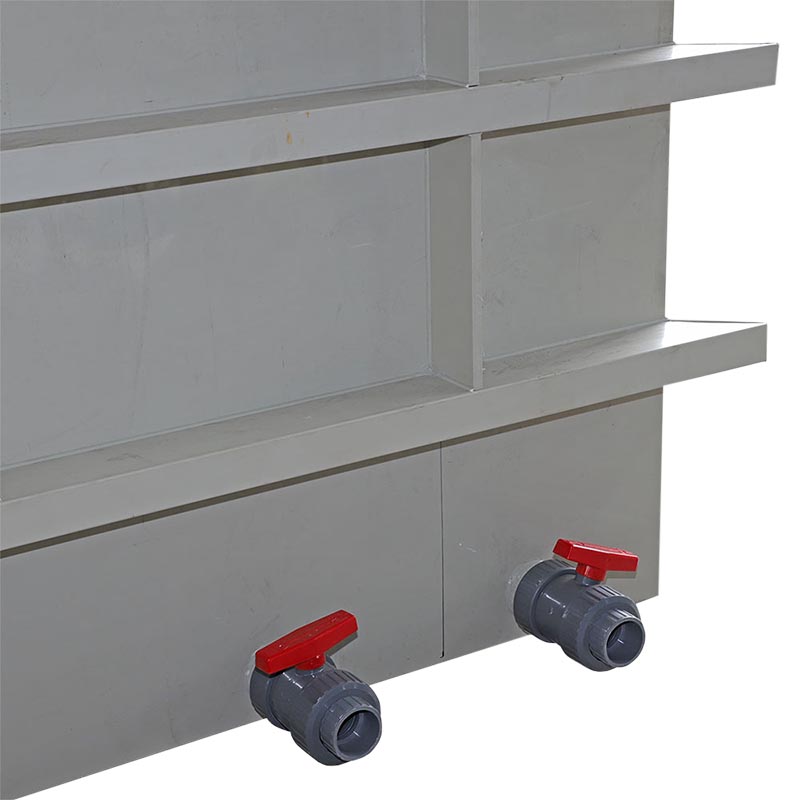
The wrong pickling tank on a steel wire line doesn’t just underperform — it stops your entire production. A tank that is too short leaves residual scale on the wire. A material that cannot handle continuous 70°C HCl exposure cracks or delaminates within years. An acid circulation design that fails to manage dissolved iron forces frequent bath dumps that eat into your margin. When you process tonnes of wire per day, every hour of downtime costs far more than the tank itself.
This guide is written specifically for production managers, maintenance engineers, and plant owners operating steel wire pickling lines and steel strip pickling lines. It assumes you already understand the basics of pickling, and now need to make a capital decision: what tank design, what material, and what features will keep your continuous line running with minimal intervention. Unlike general-purpose selection guides, every recommendation here reflects the realities of high-throughput, heated HCl processing — the dominant chemistry in wire and strip descaling. If you are starting from a lower knowledge base, our basic overview of pickling tanks is the better first read.
By the end, you will know how to specify tank dimensions for your line speed and dwell time, why PP has become the default material for continuous wire pickling, how to prevent iron-salt-related failures, and how to validate a supplier’s design against ISO 12573. Where possible, we include data from real wire pickling line projects across Asia and the Middle East.
Table of Contents
- Continuous Pickling: What’s Different for Steel Wire & Strip?
- Tank Dimensions: Calculating Length, Width, and Depth for Your Line
- Material Selection: Why PP Dominates Steel Wire Pickling
- Acid Management: Circulation, Heating, and Iron Control
- Mechanical Integration: Guides, Tension, and Fume Extraction
- 10-Year TCO for a Wire Pickling Tank
- Real Outcomes: Steel Wire Plants That Switched to PP
- Frequently Asked Questions
Continuous Pickling: What’s Different for Steel Wire & Strip?
Batch pickling — dipping a rack of parts into a tank — allows the operator to adjust dwell time, check surface quality, and pull the part when it is clean. Continuous wire and strip pickling eliminates that flexibility. The wire or strip enters one end of the line, passes through the acid bath at a fixed speed, and exits the other end — all in a matter of seconds to minutes. The tank is no longer a passive container; it is an active processing zone where chemistry, temperature, and mechanical guidance must work in lockstep.
Three parameters define the problem: line speed (metres per minute), required dwell time (seconds, determined by acid type, concentration, temperature, and scale thickness), and product cross-section (wire diameter or strip width/thickness, determining how many strands pass through simultaneously). From these, the tank length is derived: Tank Length = Line Speed × Dwell Time. A line running at 60 m/min with a 30-second dwell requirement needs an 30-metre acid immersion zone. This is not a single tank in practice — it is typically divided into multiple cells or a single long trough with weirs for acid staging.
The acid chemistry is almost universally HCl at 10–20% concentration, heated to 55–75°C. HCl is preferred over H₂SO₄ for wire because it produces a cleaner surface at lower temperatures, acts faster, and generates soluble iron chloride rather than insoluble iron sulfate scale. However, HCl’s aggressiveness at temperature means the tank material must be genuinely inert — not just resistant on a datasheet.

Tank Dimensions: Calculating Length, Width, and Depth for Your Line
Unlike batch tanks specified by volume alone, a continuous pickling tank for wire or strip is specified by its immersion length first. Here is the step-by-step calculation method we use when engineering custom pickling tanks for wire lines.
Step 1: Determine Required Dwell Time
For low-carbon steel wire with moderate mill scale, HCl at 18% and 65°C typically requires 20–35 seconds of immersion. Heavier scale or higher carbon grades may need 40–60 seconds. The most reliable method is to run a coupon test with your actual wire and acid parameters — a good tank supplier will ask for this data rather than guessing.
Step 2: Calculate Immersion Length
Multiply your maximum line speed by the required dwell time. Add 10–15% as a safety margin for future speed increases or scale variability. Example: 50 m/min line speed × 30 seconds = 25 metres of immersion, plus 15% margin = 28.75 metres total acid zone length.
Step 3: Select Tank Width and Number of Strands
The tank width must accommodate the number of wire strands running in parallel, with adequate clearance between strands and from the tank walls. A typical rule: minimum 50 mm clearance between adjacent strands, and 100–150 mm from tank side walls to the outermost strand. This prevents wire-to-wall contact during tension fluctuations and ensures acid circulation around every strand.
Step 4: Determine Depth
The acid depth must submerge the wire completely, plus an allowance for the wire catenary (the natural sag between guides) and a freeboard above the acid surface for fume containment. Typical acid depth: 300–500 mm for wire lines. Freeboard: 200–300 mm above the acid level to the tank rim. Total tank depth is the sum.
Step 5: Divide into Cells (Multi-Stage Pickling)
For lines longer than 10 metres, divide the total acid zone into 2–4 cells separated by overflow weirs. This creates a counter-current flow: fresh acid enters at the wire exit end, overflows into the previous cell, and the most contaminated acid leaves at the wire entry end. This staging maintains a higher free-acid concentration at the exit, where final surface quality is determined, and reduces overall acid consumption by 15–20% compared to a single bath.
All wall thickness calculations for these dimensions must follow ISO 12573:2011, with the specific gravity of the acid solution adjusted for dissolved iron content (see Section 4).
Material Selection: Why PP Dominates Steel Wire Pickling
Walk through any modern steel wire pickling plant in India, Thailand, or the Middle East, and you will see polypropylene tanks. The reason is not theoretical — it is the result of material failures that have eliminated the alternatives.
PP vs FRP: The Continuous-Operation Factor
Wire pickling lines run 16–24 hours per day, 300+ days per year. They do not cool down between shifts. FRP’s corrosion barrier — a resin-rich layer 2–4 mm thick — is under continuous thermal and chemical load. HCl molecules slowly permeate through even the best vinyl ester resins at 65°C. After 3–5 years, the barrier blisters, the glass fibers underneath are attacked, and the structural wall delaminates. We have replaced 40+ FRP tanks in wire and strip applications in the past five years alone; the failure mode was permeation-driven in every documented case.
PP does not have a barrier layer to permeate. It is a single material, chemically inert to HCl across the full concentration and temperature range used in wire pickling. Its corrosion rate in 18% HCl at 65°C, measured ultrasonically on tanks after 8+ years of continuous service, is less than 0.05 mm/year. This is not a lab number — it is pulled from our inspection records on operational wire lines.
Managing Temperature: PP’s Operating Window
PP maintains full structural integrity up to 80°C continuous operation. Most wire pickling operates at 55–75°C — comfortably within this window. The key engineering requirement is wall thickness calculation that accounts for the temperature-derated allowable stress of PP. At 65°C, PP’s allowable design stress is lower than at ambient, meaning walls must be thicker than a simple hydrostatic calculation would suggest. A supplier following ISO 12573 will perform this derating explicitly; a supplier using a “standard thickness” table may not. For those deeper into material science, our types of pickling tanks comparison provides a full head-to-head analysis.
Weld Integrity Under Thermal Cycling
Wire lines occasionally shut down for maintenance, and the acid cools. On restart, the tank undergoes a temperature ramp of 40–50°C within hours. This thermal cycling stresses every joint. PP’s homogeneous extrusion welds — where the filler rod and parent sheet are the same material — expand and contract uniformly with the tank walls. Bolted FRP joints with gaskets do not; the differential movement opens micro-leak paths over repeated cycles. This is why PP welded joints tested to 10 bar show zero permeation after 5 years of HF exposure in semiconductor applications, and perform similarly in wire line HCl environments. The welding process must conform to established practices such as those detailed in TWI’s hot gas welding guidance.
Acid Management: Circulation, Heating, and Iron Control
A steel wire pickling tank is a chemical reactor, not a storage vessel. Acid management determines whether you get consistent surface quality and whether your tank sees a 5-year or 15-year life.
Circulation and Agitation
Stagnant acid stratifies: the heavier iron-rich solution sinks, the fresh acid floats, and the wire runs through a layer of depleted chemistry. External circulation pumps — typically PP or PVDF construction — draw acid from the tank bottom, pass it through a heat exchanger, and return it through distribution headers along the tank length. This maintains uniform concentration and temperature. A circulation rate of 4–6 tank volumes per hour is standard for high-throughput wire lines.
Heating: Direct vs Indirect
Indirect heating via external shell-and-tube or plate heat exchangers is strongly preferred over immersion heaters for wire pickling tanks. Immersion heaters create localized hot spots on the tank wall that accelerate PP creep. They also occupy space inside the tank that can interfere with wire guidance. External heating, combined with the circulation loop, delivers uniform temperature without hot spots. Heat exchanger materials: graphite or PVDF for the acid side; stainless steel is acceptable only on the service fluid side.
Iron Chloride Buildup: The Hidden Tank Killer
As HCl dissolves scale, iron chloride (FeCl₂) accumulates in the bath. When the iron concentration exceeds 120–150 g/L (as Fe), pickling efficiency drops sharply, and the solution’s specific gravity increases from approximately 1.10 to 1.30 or higher. This higher density increases the hydrostatic load on the tank walls — a factor often overlooked in wall thickness calculations that assume fresh acid density. Always specify to your tank supplier the maximum iron content at which you will operate, not just the fresh acid concentration. When iron reaches the limit, a portion of the bath is bled off and replaced with fresh acid — a continuous bleed-and-feed system is more efficient than batch dumping for wire lines.
Mechanical Integration: Guides, Tension, and Fume Extraction
The tank structure must interface with the wire handling equipment without compromising chemical integrity. This is where tank design intersects with mechanical engineering.
Wire Guides and Rollers
Submerged guide rollers — typically made from PVDF, PP, or ceramic-coated steel — are mounted on support structures that attach to the tank walls or floor. These supports transmit the wire’s tension and vibration into the tank. The attachment points must be reinforced with additional PP pads welded to the tank wall, distributing the load and preventing stress cracking at the point of fixation. Do not bolt guide brackets directly through the tank wall without reinforcement pads — this is a common cause of leaks in year 2–3.
Entry and Exit Seals
The wire enters and exits the tank through openings that must minimise acid splash and fume escape. Common solutions: wiper seals (PP or rubber lips that the wire passes through), water sprays that rinse the wire as it exits and create a liquid seal, and enclosed entry/exit hoods with dedicated extraction. The seal material must be compatible with HCl at temperature; EPDM or Viton are typical choices for flexible seals. For a complete pickling station package, our standard pickling tank systems incorporate integrated seal and hood interfaces.
Fume Extraction
Continuous HCl pickling at 65°C generates significant acid mist. Extraction hoods along the tank length, connected to a fume scrubber, must achieve an air velocity of 0.5–1.0 m/s across the open acid surface to contain fumes. The extraction ductwork, like the tank, should be PP — both for corrosion resistance and to eliminate the fire risk that PVC ducting presents in high-temperature acid service. With proper extraction, a PP-lined system achieves >98% fume capture efficiency, a figure verified across multiple installations and important for compliance with regulations like DENR in the Philippines and PCD in Thailand.
10-Year TCO for a Wire Pickling Tank
Procurement cost is a fraction of the total. The table below uses data from a 12-strand steel wire pickling line processing 100 tonnes/day with an 8,000L PP tank (multi-cell) versus the FRP tank it replaced.
| Cost Component | PP Tank (Multi-Cell) | FRP Tank (Single Shell) |
|---|---|---|
| Initial Procurement (tank + installation) | $14,500 | $12,200 |
| Scheduled Maintenance (10yr, labor + materials) | $5,200 | $12,800 |
| Unscheduled Repairs (leak events, 10yr) | $1,200 | $7,500 |
| Production Downtime (at $400/hr, 10yr) | $6,000 | $22,000 |
| Acid Consumption Variance (vs PP baseline) | Baseline | +$5,500 |
| Total 10-Year TCO | $26,900 | $60,000 |
The FRP tank’s initial saving of $2,300 turned into a $33,100 higher total cost over 10 years — a 2.2x multiple. The dominant factor: downtime. A wire line generating $400+ per hour in contribution margin loses $9,600 per 24-hour shutdown. The FRP tank suffered two unscheduled production stops for blister repairs in years 4 and 7; the PP multi-cell tank has required zero structural interventions in the same period. The smooth, hydrophobic PP surface also reduced acid consumption by eliminating the scale traps where acid pooled and degraded in the rougher FRP interior.
Real Outcomes: Steel Wire Plants That Switched to PP
These are not hypotheticals. They are projects where our engineering team was involved in the specification, commissioning, or follow-up inspection.
Steel Wire Drawing Plant, Pune, India
A high-carbon wire drawer operating an FRP pickling trough at 18% HCl and 70°C experienced blistering along the floor-to-wall joint after only 3.5 years. Acid was seeping through micro-cracks in the corrosion barrier and staining the concrete plinth. The replacement was a 4-cell PP counter-current line, each cell 6 metres long, total acid zone 24 metres. Wall thickness: 20 mm bottom, 15 mm sidewalls, with integral reinforcement ribs at guide roller attachment points. After 4 years of continuous operation, ultrasonic thickness measurements show less than 0.2 mm total wall loss. The plant’s maintenance manager noted that weekly cleaning time dropped from 2 hours to 30 minutes — the smooth PP surface simply wipes clean, whereas the old FRP required scraping of iron salt deposits.
Steel Strip Pickling, Rayong, Thailand
A narrow strip pickling line running 200 mm wide strip at 40 m/min originally specified a PP tank. The tank supplier (not our company) used non-ISO 12573 wall thickness, resulting in excessive deflection of the long sidewalls under hydrostatic load. After 2 years, stress cracks appeared at nozzle penetrations. The replacement tank, designed with proper wall thickness per ISO 12573 and full-penetration weld qualification, has now completed 3 years with zero weld defects on annual spark retest. The lesson: PP is the correct material choice, but only if the engineering calculations are done properly. Always request the wall thickness calculation sheet, not just a “standard” design.
Galvanizing Wire Line, Manila, Philippines
A combined pickling-and-flux line for galvanized wire used SS316L tanks. The pickling section (HCl 12%, 60°C) developed through-wall pits within 2 years. The plant replaced the pickling section with a 3-cell PP tank and retained the SS316L for the flux section (zinc ammonium chloride, non-acid). The PP pickling cells have now outlasted two generations of the downstream flux tank, demonstrating that material selection must be process-zone-specific. For hot-dip wire lines, our galvanizing tank configurations address this pickling-to-flux interface.
Frequently Asked Questions
How do I calculate the correct length for a steel wire pickling tank?
Multiply your maximum line speed (in metres per minute) by the required dwell time (in minutes, converted from seconds). For example, 60 m/min × 0.5 min (30 seconds) = 30 metres of acid immersion zone. Add 10–15% as a buffer for future line speed increases or heavier scale loads. Divide this total length into 2–4 cells separated by overflow weirs to create counter-current acid flow, which maintains a higher free-acid concentration at the wire exit and reduces overall acid consumption by 15–20%.
Why is PP preferred over FRP for continuous wire pickling?
Continuous wire pickling runs 16–24 hours per day at 55–75°C, creating a constant thermal and chemical load. FRP fails by acid permeation through the resin-rich barrier layer, which blisters and delaminates after 3–7 years. PP is a single, chemically inert material with no barrier to permeate. Its homogeneous welded joints do not leak. Measured corrosion rates in HCl at 65°C are less than 0.05 mm/year, delivering a reliable 10–15 year service life in wire pickling service.
What acid concentration and temperature should I use for steel wire?
Hydrochloric acid (HCl) at 10–20% concentration, heated to 55–75°C, is the industry standard for steel wire and strip. HCl produces a cleaner surface faster than sulfuric acid and generates soluble iron chloride, which is easier to manage. The exact combination depends on your scale type and line speed. A common starting point is 15–18% HCl at 65°C, with dwell time adjusted until the wire emerges uniformly grey-white. Always run a coupon test with your actual wire to confirm.
How does dissolved iron affect pickling tank design?
As iron dissolves into the HCl bath, the solution’s specific gravity increases from about 1.10 (fresh acid) to 1.30 or higher when iron reaches 120–150 g/L. This higher density increases the hydrostatic pressure on tank walls. Wall thickness calculations must use the maximum expected specific gravity, not fresh acid density. Additionally, high iron content reduces pickling efficiency, so a bleed-and-feed system that continuously removes a portion of spent acid and adds fresh acid maintains both chemistry and manageable density.
How important is acid circulation in a wire pickling tank?
Essential. Without circulation, acid stratifies: heavier iron-rich solution settles at the bottom, and the wire runs through depleted chemistry. External circulation pumps — typically at 4–6 tank volumes per hour — draw from the tank bottom, pass through a heat exchanger, and return through distribution headers along the tank length. This maintains uniform temperature and concentration, ensuring consistent pickling quality across every strand and every metre of the line.
Can I use the same tank design for steel wire and steel strip?
The principles are the same, but the mechanical design differs. Strip requires wider tanks to accommodate the strip width, and the guidance system uses flat rollers or pads rather than grooved sheaves. Strip tanks also need more robust fume extraction because the larger open acid surface area generates more mist. The wall thickness calculation method (ISO 12573) and material recommendation (PP) remain identical. Always specify the product dimensions (width, thickness, number of strands/strips) when requesting a design.
Specify Your Steel Wire Pickling Tank with Confidence
Every wire line has a unique profile — speed, strand count, acid chemistry, and space constraints. Send us your line parameters and our applications engineering team will return a tank design proposal with ISO 12573 wall thickness calculations, a multi-cell layout recommendation, and a 10-year TCO estimate for your specific throughput. Contact us to begin the specification process, or review our 2026 B2B buyer’s guide for a complete procurement framework.
Written by Corbin, Applications Engineer at XICHENG EP LTD.
With 10+ years designing PP pickling tanks for steel wire, strip, and tube lines across 30+ countries and 500+ installations, this guide reflects field-measured performance data, failure analysis from tank replacements, and direct operator feedback collected during commissioning and follow-up visits.