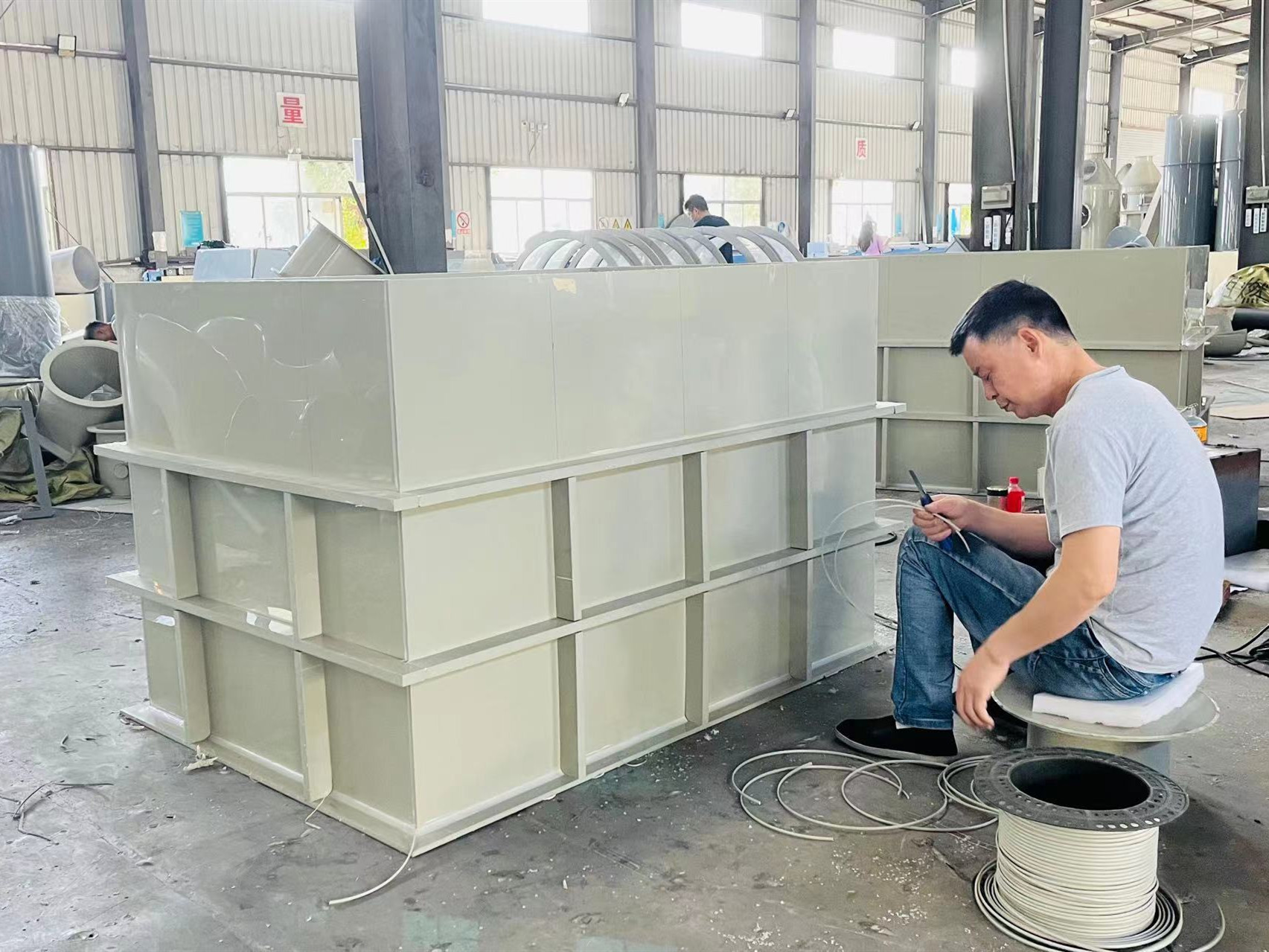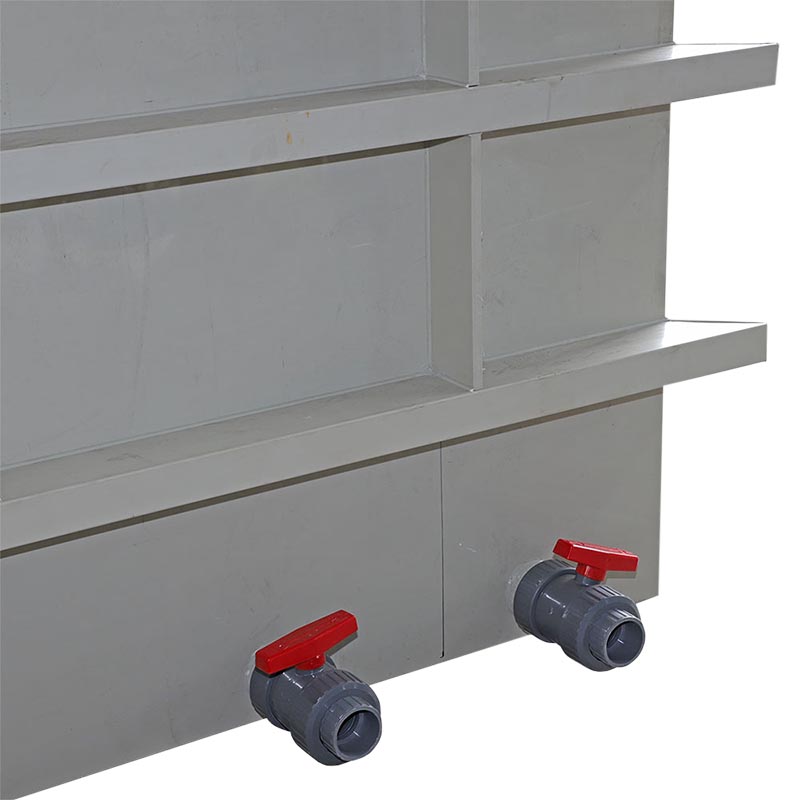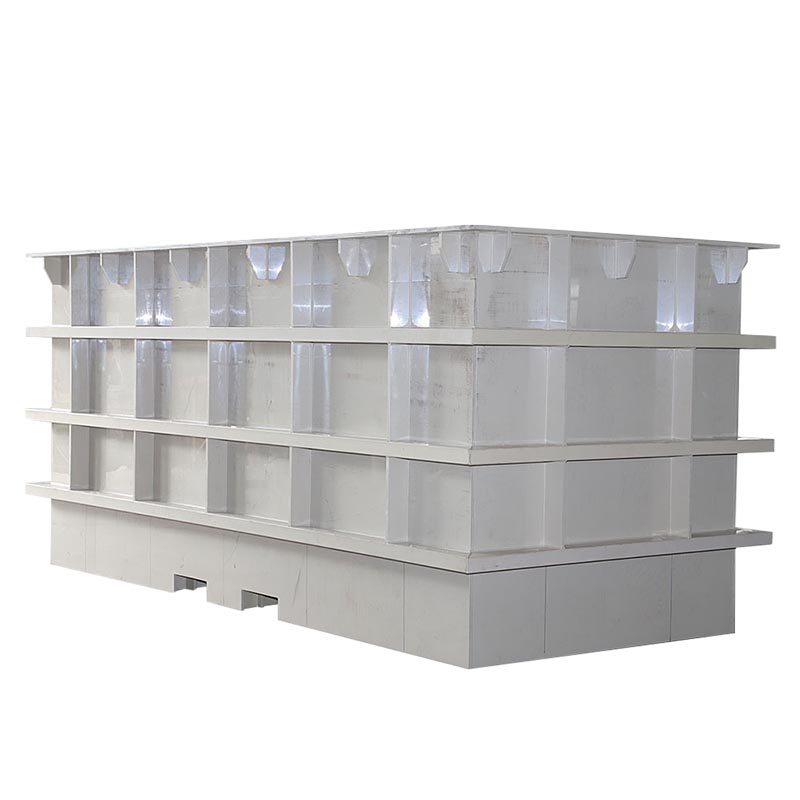
Selecting a pickling tank supplier is not about picking the lowest price — it is about avoiding the supplier whose tank will leak acid onto your factory floor in year two. We have seen it happen. A galvanizing plant in Southeast Asia saved $2,300 on a FRP tank, only to lose over $30,000 in downtime and emergency replacement three years later. The root cause was not a bad material choice; it was a supplier qualification process that stopped at a price comparison and a brochure.
This checklist provides a structured, five-point framework for pickling tank supplier qualification. It is built from our experience as a factory-direct PP manufacturer with over 500 installations across 30+ countries, and from the procurement failures we have been called in to fix. Every point includes a specific verification method, the documentation you should demand, and the common supplier evasions that signal trouble. Use it as your RFQ evaluation scorecard — if a supplier cannot pass all five points, they are not qualified to build a tank that will hold hot acid for a decade. For a broader procurement framework beyond supplier qualification, our 2026 B2B buyer’s guide covers the full assessment process.
Table of Contents
- Point 1: Engineering Design — The ISO 12573 Wall Thickness Calculation
- Point 2: Welding Qualification — WPS, PQR, and Operator Certification
- Point 3: Non-Destructive Testing — 100% Spark Test and Hydrostatic Certificate
- Point 4: Material Traceability — Mill Certificates and Resin Specifications
- Point 5: Verified References — Phone Calls, Not Photo Galleries
- How to Use This Checklist: The Supplier Scorecard
- What Happens When You Skip the Checklist: Two Real Cases
- Frequently Asked Questions
Point 1: Engineering Design — The ISO 12573 Wall Thickness Calculation
The first document you should request from any pickling tank supplier is the wall thickness calculation. Not a standard dimension table. Not an assurance that “we always build them this thick.” A calculation sheet that follows ISO 12573:2011, the international standard for thermoplastic tank design.
What to Demand
- A calculation report showing the required wall thickness for the tank bottom, sidewalls, and roof (if applicable), using the specific gravity of your process fluid at maximum iron loading, not fresh acid.
- The allowable design stress for PP at your maximum operating temperature (e.g., 65°C or 80°C). The stress value must be temperature-derated per the PP material grade data sheet — a calculation at ambient temperature is invalid for a heated pickling tank.
- Reinforcement design for all nozzles ≥50 mm diameter, showing pad thickness and weld detail.
Common Supplier Evasions (And Why They Fail)
- “We use a standard thickness for all tanks this size.” There is no standard thickness. Wall thickness depends on fluid density, temperature, and tank geometry. A 8,000L tank holding HCl with 120 g/L dissolved iron at 70°C requires a different calculation than the same tank at ambient water. If the supplier cannot produce the calculation, they did not do it.
- “ISO 12573 is for pressure vessels, not pickling tanks.” ISO 12573 explicitly covers atmospheric and low-pressure thermoplastic tanks. It is the relevant standard. A supplier unfamiliar with it is unfamiliar with the engineering baseline for PP tank fabrication.
Why This Matters
A tank with insufficient wall thickness will not fail immediately — it will creep over 2–5 years, developing stress cracks at the bottom corners where hydrostatic pressure is highest. By the time the crack is visible, the tank wall has been structurally compromised for months. A proper ISO 12573 calculation prevents this failure mode at the design stage. When you specify a custom plastic tank, the calculation sheet should be the first deliverable in the engineering package.

Point 2: Welding Qualification — WPS, PQR, and Operator Certification
A PP tank is only as strong as its welds. The parent material can be the best homopolymer PP on the market — if the welds are porous or under-penetrated, the tank will leak at the seams, not through the wall. Welding qualification separates industrial fabricators from general plastic workshops.
What to Demand
- Welding Procedure Specification (WPS): A documented procedure for each weld type (butt weld, extrusion fillet weld, nozzle reinforcement weld) specifying gas temperature, welding speed, filler rod grade, and joint preparation (bevel angle, root gap).
- Procedure Qualification Record (PQR): Tensile test results from weld coupons made to the WPS, demonstrating that the welded joint achieves at least 90% of the parent material tensile strength. Accept nothing less than 90% — this is the industry benchmark for a properly executed PP weld.
- Welder Qualification Certificates: Each welder who will work on your tank must be certified to the WPS for the specific joint type. A general “experienced welder” claim is not a qualification.
Common Supplier Evasions
- “Our welders have 20 years of experience — we don’t need formal qualifications.” Experience is valuable but unverifiable. A WPS/PQR package provides objective, third-party-verifiable evidence. Insist on it.
- “We can provide a weld sample for visual inspection.” Visual inspection does not detect subsurface porosity, lack of fusion, or internal cavities. Only destructive tensile testing of weld coupons reveals joint strength, and only spark testing (Point 3) reveals porosity.
Why This Matters
In semiconductor wafer etching applications handling HF, PP welded joints qualified to the standards described in TWI’s technical guidance on hot gas welding have demonstrated zero permeation after 5 years of continuous exposure. Unqualified welds in the same environment can develop micro-leaks within 12 months. The difference is in the documentation — and the discipline it enforces in the fabrication bay.
Point 3: Non-Destructive Testing — 100% Spark Test and Hydrostatic Certificate
Even a qualified welder working to a qualified procedure can produce a defective weld. Non-destructive testing (NDT) catches these defects before the tank leaves the factory. Two tests are mandatory for any pickling tank.
What to Demand
- 100% Spark Test Report: Every millimetre of every internal weld must be tested with a high-frequency spark tester at a minimum of 20 kV. The report must be a marked-up weld map showing that each weld segment was tested, with any defects marked, reworked, and re-tested. A spark test detects pinholes, cavities, and areas of incomplete fusion that are invisible to the naked eye.
- 24-Hour Hydrostatic Test Certificate: The completed tank, filled with water to its design level and held for a minimum of 24 hours, must show zero pressure drop and zero visible leakage at any weld, nozzle, or flange. This test verifies the entire welded assembly under operational load.
Common Supplier Evasions
- “We do a water fill test for a few hours — that’s enough.” A short-duration fill may not reveal slow seepage through a micro-porosity that opens under sustained hydrostatic pressure. The 24-hour minimum is not arbitrary; it allows time for water to migrate through any connected porosity network and become visible on the exterior surface.
- “We spark-test critical areas only.” A leak from a non-critical area is still a leak. 100% coverage is the standard. Accept no exceptions.
Why This Matters
We have traced tank leaks in service back to spark test records — or the lack of them — on multiple occasions. In one case, a tank that leaked at a bottom corner weld after 14 months of HCl service had no spark test report on file. The supplier claimed visual inspection was sufficient. Visual inspection missed a 3 mm cavity 1.5 mm below the weld surface that the spark tester would have flagged instantly. For every pickling tank system we manufacture, both the spark test report and the hydrostatic certificate are standard deliverables — not optional extras.
Point 4: Material Traceability — Mill Certificates and Resin Specifications
The best welding procedure in the world cannot compensate for substandard raw material. PP sheets vary in quality depending on the polymer grade, filler content, and manufacturing process. Engineering-grade homopolymer PP — sourced from reputable mills — is chemically distinct from lower-cost copolymer or recycled PP.
What to Demand
- PP Sheet Mill Test Certificates (MTCs): For each sheet lot used in your tank, the certificate must identify the material grade (e.g., Simona PP-DWST, Röchling Polystone P Homopolymer), lot number, and key properties: density, melt flow index, tensile strength, and chemical resistance classification. The certificates must be traceable to the specific tank sections (a material traceability matrix).
- Welding Rod Certificates: The filler rod must be the identical PP grade as the parent sheet. A mismatched rod — using a lower-grade filler on a high-grade sheet — creates a weld that is chemically weaker than the surrounding material.
- For FRP Tanks: Resin type (vinyl ester, epoxy), glass content, and cure verification. The resin must be specifically rated for your acid chemistry at your operating temperature — generic “chemical-resistant resin” is not a specification.
Common Supplier Evasions
- “We buy from reputable distributors — the material is fine.” Distributor reputation does not replace lot-specific documentation. Request the actual mill certificates for your tank’s material.
- “All PP is the same.” Homopolymer PP and copolymer PP have different chemical resistance and mechanical properties at elevated temperatures. Copolymer PP softens at a lower temperature and is more susceptible to stress cracking in acid service. If the supplier cannot tell you which type they use, they do not understand the material.
Why This Matters
We have replaced tanks where the failure analysis traced back to the material — not the design or welding. In one case, a PP tank used a sheet with a higher-than-specified melt flow index, indicating a lower molecular weight polymer. The tank exhibited accelerated creep at the bottom corners and required replacement after 6 years instead of the expected 12–15 years. The purchasing manager’s saving on a lower-cost sheet lot cost the plant a full tank replacement. Material traceability is your insurance against this.
Point 5: Verified References — Phone Calls, Not Photo Galleries
Every supplier has a photo gallery. Photos show a tank that existed at a moment in time; they do not show whether it is still leak-free three years later. Reference verification is the step most buyers skip — and the step that separates marketing from engineering.
What to Demand
- A minimum of three reference installations in your specific industry (electroplating, galvanizing, steel wire pickling, etc.) using the same acid chemistry and similar operating temperature.
- Contact details for a plant engineer — not a procurement manager — at each reference site. The engineer knows the tank’s leak history, maintenance frequency, and any unplanned downtime. The procurement manager knows the purchase order value.
- Permission to call, not just email. A 10-minute phone conversation with a reference will surface details that a formal email exchange will not.
What to Ask the Reference
- How long has the tank been in service, and has it ever leaked?
- What is your actual maintenance routine — and is it different from what the supplier told you it would be?
- Was the installation completed on the promised timeline? If not, what caused the delay?
- If you needed to buy another tank tomorrow, would you buy from this supplier again?
- Can you share the original spark test and hydrostatic reports for your tank?
Common Supplier Evasions
- “We can’t share customer contact details due to confidentiality.” This is the most common objection, and it is occasionally valid. But a supplier with satisfied customers will have at least a few who have agreed to serve as references. No references at all, across hundreds of claimed installations, suggests those customers would not provide a positive reference.
- “Here are some project photos and a list of client names.” Names without contact details are unverifiable. Photos without dates can be from a tank delivered last month — or a tank that was replaced two years ago.
Why This Matters
One of the most revealing reference calls we are aware of involved a supplier who had provided a glossy reference list of “global clients.” The prospective buyer called one of the listed clients and discovered that the tank had been decommissioned after a leak in year four — and that the supplier had not been invited to bid on the replacement. The supplier’s reference list was technically accurate (they had supplied the tank) but materially misleading. Phone verification revealed this in five minutes. For electroplating-specific references, PP plating tank installations in multi-shift production environments provide a particularly demanding test of tank quality.
How to Use This Checklist: The Supplier Scorecard
Assign each of the five points a Pass (✓) or Fail (✗) for each supplier you are evaluating. The scoring rules are conservative by design — a supplier who fails any point is carrying a material risk.
| Checkpoint | Pass Criteria | Supplier A | Supplier B |
|---|---|---|---|
| 1. ISO 12573 Wall Thickness Calc | Calculation sheet provided, temperature-derated, specific gravity matched to process | ||
| 2. Welding Qualification (WPS/PQR) | WPS, PQR with ≥90% tensile strength, welder certs provided | ||
| 3. NDT (Spark + Hydro) | 100% spark test report (weld map), 24-hr hydrostatic certificate | ||
| 4. Material Traceability (MTCs) | PP sheet mill certificates, welding rod certificates, material traceability matrix | ||
| 5. Verified References | 3+ reference contacts in same industry, phone verification completed, positive feedback | ||
| Overall Risk Rating | 5/5 = Low Risk | 3–4/5 = Medium Risk (negotiate gaps) | ≤2/5 = High Risk (do not proceed) |
Medium-risk suppliers (3–4 passes): These suppliers may be technically capable but disorganised in documentation. They can be considered if they agree to provide the missing documentation before the purchase order is signed. Do not accept a promise to “provide it later” — the missing item must be in your hand before you commit.
High-risk suppliers (≤2 passes): These suppliers lack fundamental engineering documentation. Even if their price is attractive, the probability of a leak, regulatory non-compliance, or early replacement is high. The procurement saving will be consumed by the first unscheduled repair. We have documented this pattern across multiple replacement projects, most recently for a galvanizing plant in Southeast Asia where the initial supplier failed on points 2, 3, and 5 — and the tank leaked within two years.
What Happens When You Skip the Checklist: Two Real Cases
These cases are drawn from our project database. The supplier names are anonymised; the outcomes are not.
Case 1: Galvanizing Line, Thailand — Failed on Points 1, 3, and 5
A hot-dip galvanizing line purchased an 8,000L PP pickling tank from a local fabricator. The price was 22% below the nearest qualified competitor. The buyer did not request an ISO 12573 calculation (Point 1), accepted verbal assurance that welds were “fully tested” without a spark report (Point 3), and did not call the single reference provided (Point 5). The tank’s bottom wall was 12 mm — inadequate for the 1.28 specific gravity of the iron-laden HCl bath at 65°C. Bottom corner welds developed stress cracks after 18 months. The emergency replacement — including 9 days of lost galvanizing production — cost approximately 3.8x the original procurement saving. The replacement tank, sourced through a qualified supplier with full documentation, has now completed 4 years with zero defects.
Case 2: Steel Wire Pickling, India — Failed on Point 2
A steel wire plant selected a supplier who provided an ISO 12573 calculation (Point 1 passed) and material certificates (Point 4 passed) but whose welding qualification was incomplete: they provided a generic WPS without PQR tensile test results. The buyer accepted the supplier’s explanation that “tensile testing is for pressure vessels, not atmospheric tanks.” Within 2 years, extrusion welds at the nozzle reinforcements developed leaks. A subsequent independent inspection found that the weld strength was approximately 65% of the parent material — well below the 90% standard. The supplier had used a lower-grade filler rod that was incompatible with the PP sheet grade. The plant replaced all nozzle welds at significant cost and lost 5 days of production. Lesson: all five points are mandatory. Partial qualification is not qualification.
Frequently Asked Questions
What is the single most important document to request from a pickling tank supplier?
The ISO 12573 wall thickness calculation for your specific process conditions. This document confirms that the supplier has engineered the tank — not just fabricated it — for your acid chemistry, temperature, and fluid density. A supplier who cannot produce this calculation is relying on rules of thumb, not engineering analysis, and the resulting tank may be under-designed for your application. Without this document, none of the subsequent quality checks matter because the design itself may be the failure point.
How do I verify that a spark test was actually performed on my tank?
Request a marked-up weld map showing each weld segment with the spark test voltage applied, the date of testing, and the signature of the inspector. A legitimate spark test report is not a one-line statement — it is a detailed document that maps each weld to a test result. If possible, arrange to witness the spark test in person at the factory before the tank is crated, or request a video recording of the test with the tank serial number visible. If the supplier resists allowing you to witness the test, treat it as a warning sign.
Can a supplier with no pickling tank references still be qualified?
Only if they can demonstrate relevant experience in closely related chemical containment applications — for example, acid storage tanks or chemical process vessels with welded PP construction — and can provide the full documentation package for those installations. Without pickling-specific references, you are accepting the risk that the supplier does not understand the operational demands unique to pickling: continuous heating, iron salt accumulation, mechanical loads from part handling, and fume extraction integration. This risk should be reflected in your commercial terms, such as a longer warranty period or a retention payment held until after the first year of operation.
How long should a pickling tank warranty be, and what should it cover?
A qualified supplier should offer a minimum 2-year warranty on materials and workmanship, covering any leak caused by defective welding or material failure under specified operating conditions. The warranty should explicitly state the design parameters (acid type, concentration range, maximum temperature) within which it applies. Be aware that no warranty covers damage from operating outside these parameters — for example, running the tank above its design temperature or using an acid chemistry not disclosed during the design phase. For a complete overview of what to negotiate beyond warranty, our B2B buyer’s guide includes a section on commercial terms and payment structures.
What should I do if my current supplier failed this checklist but I have already placed an order?
If the order is not yet in fabrication, request the missing documentation immediately and make payment milestones conditional on its delivery. If the tank is already fabricated, commission an independent third-party inspection before accepting delivery — including an ultrasonic thickness survey of the walls and a spark test of all welds. If the tank fails the independent inspection, you have grounds to reject delivery, depending on your contract terms. The cost of a third-party inspection ($1,500–$3,000) is far lower than the cost of installing a defective tank and replacing it later.
Does this checklist apply to FRP and stainless steel pickling tank suppliers as well?
The principles apply, but the specific standards differ. For FRP, Point 1 references the relevant FRP design standard (e.g., BS 4994 or ASME RTP-1) instead of ISO 12573. Point 2 addresses laminate procedure qualification rather than welding. Point 3 substitutes a Barcol hardness test and visual inspection of the corrosion barrier for spark testing. Point 4 requires resin and glass certifications. Point 5 (verified references) remains identical. For stainless steel, the applicable design code is typically ASME VIII or a similar pressure vessel standard, and NDT includes dye penetrant or radiography of welds. The core message — demand documented, verifiable quality — remains consistent across materials.
Put This Checklist to Work on Your Next Supplier Evaluation
If you are currently reviewing pickling tank proposals, send us your process parameters and we will return a technical assessment that includes an ISO 12573 wall thickness calculation, a welding procedure summary, and a compliance alignment review for your jurisdiction — all documented, all verifiable. Contact our engineering team to begin the qualification process. For additional guidance on comparing supplier bids beyond the qualification checklist, refer to our 2026 B2B buyer’s guide.
Written by Corbin, Applications Engineer at XICHENG EP LTD.
With 10+ years designing PP pickling tanks across 30+ countries and 500+ installations, this supplier qualification framework is drawn from procurement successes and failures documented in our project records. Every supplier evasion described in this article reflects an actual conversation encountered during bid evaluations or failure investigations.